Snoop Doggy Dogg’s Tha Doggfather Turns 30: The Album He Made Without Dr. Dre
Released during one of the most turbulent periods in Death Row Records history, Snoop’s second album arrived without the producer who helped make him a superstar.
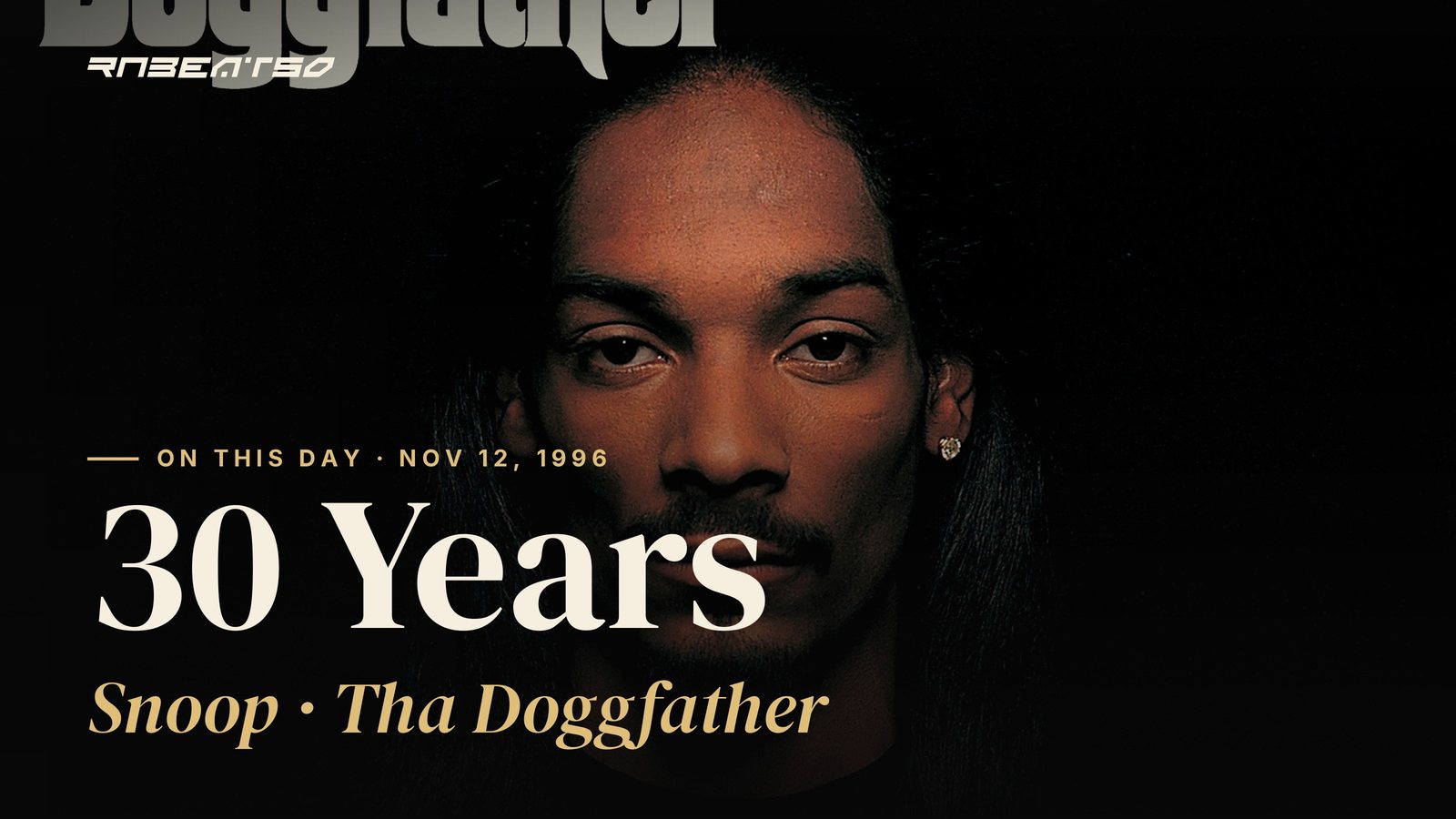
How do you follow one of the biggest debut albums in hip-hop history when the producer behind it has left your record label?
That was the challenge facing Snoop Doggy Dogg in 1996.
On 12 November 1996, he released Tha Doggfather, his second studio album and the follow-up to 1993’s Doggystyle.
But the circumstances couldn’t have been more different.
Dr. Dre had left Death Row Records. Tupac Shakur had been killed just two months earlier. And the label that had dominated West Coast hip-hop was facing enormous uncertainty.
Snoop was about to find out whether he could carry the next chapter of his career without Dre behind the boards.
The Producer Who Wasn’t There
Snoop’s debut album, Doggystyle, had arrived in 1993 with Dr. Dre shaping its unmistakable G-funk production.
By 1996, the partnership had changed.
Dre left Death Row earlier that year to establish his own label, leaving Snoop to assemble a different production team for Tha Doggfather.
In an August 1996 interview with the Los Angeles Times, Snoop admitted that Dre’s departure initially made him nervous.
But after speaking with Death Row boss Suge Knight, he became determined to prove that audiences appreciated him as an artist, not simply as the voice on Dre’s instrumentals.
It was a crucial moment in his career.
A New Team Behind the Music
Instead of bringing Dre back, Snoop turned to producers including DJ Pooh, Daz Dillinger, Soopafly, L.T. Hutton and Sam Sneed.
The album retained elements of the West Coast sound that made him famous, from deep basslines to smooth funk melodies.
But it also gave Snoop room to explore a different musical direction.
“Snoop’s Upside Ya Head,” featuring Charlie Wilson, brought familiar funk influences into the mix.
“Vapors” revisited Biz Markie’s classic, while records such as “Freestyle Conversation” placed greater emphasis on Snoop’s delivery and personality.
Charlie Wilson, Kurupt, Warren G and other collaborators helped build a record that still sounded rooted in the Death Row tradition, even without its most famous producer.
An Album Released During Death Row’s Most Difficult Year
The timing made Tha Doggfather particularly significant.
Tupac Shakur had died in September 1996, just weeks before the album’s release.
Suge Knight was also facing serious legal problems, and Dr. Dre’s departure had raised questions about the label’s future.
In November, both Snoop’s album and Tupac’s posthumous The Don Killuminati: The 7 Day Theory were competing at the top of the American album charts.
For a brief moment, Death Row still dominated the commercial landscape.
But behind those sales figures, the label was undergoing major changes.
479,000 Copies in One Week
Despite the pressure surrounding its release, Tha Doggfather debuted at No. 1 on the Billboard 200.
According to contemporary Los Angeles Times reporting, the album sold approximately 479,000 copies in its first week.
That was a major achievement, although it fell below the extraordinary first-week sales of Doggystyle, which had sold around 803,000 copies in 1993.
In Britain, Tha Doggfather reached No. 15 on the Official Albums Chart and topped the UK Hip Hop and R&B Albums Chart.
The record proved that Snoop remained a major commercial force even as the musical partnership and label environment around him changed.
The Album That Marked the End of an Era
Listening to Tha Doggfather today, it’s difficult to separate the music from what was happening around it.
The album arrived after the death of Tupac, after Dre’s departure and before Snoop eventually moved on from Death Row himself.
It wasn’t simply another collection of West Coast rap records.
It documented an artist trying to establish his own direction while the label that made him famous was changing around him.
Thirty years later, Tha Doggfather remains one of the most revealing chapters of Snoop’s career.
Could Snoop have made another Doggystyle without Dr. Dre? That was the question in 1996. Tha Doggfather was his answer.
- Apple Music: Tha Doggfather (released 12 November 1996, official album artwork, Death Row/Interscope)
- Los Angeles Times: Trying to Get His Bite Back (12 August 1996) — Snoop on Dre's departure, talking to Suge Knight
- Los Angeles Times: Snoop Barks Loud (21 November 1996) — Tha Doggfather first-week sales of 479,000; Doggystyle 803,000; Don Killuminati at No. 2
- Billboard: Snoop Dogg chart history — Tha Doggfather Billboard 200 No. 1
- Official Charts: Tha Doggfather — UK Albums Chart No. 15; Official Hip Hop and R&B Albums Chart No. 1
- Snoop Dogg: Snoop's Upside Ya Head official video (SnoopDoggVEVO)