Missy Elliott’s Under Construction Turns 24: The Studio Mistake That Helped Create “Work It”
From a backwards vocal recorded by accident to an emotional tribute to Aaliyah and Left Eye, Missy’s fourth album was more than another collection of hits.
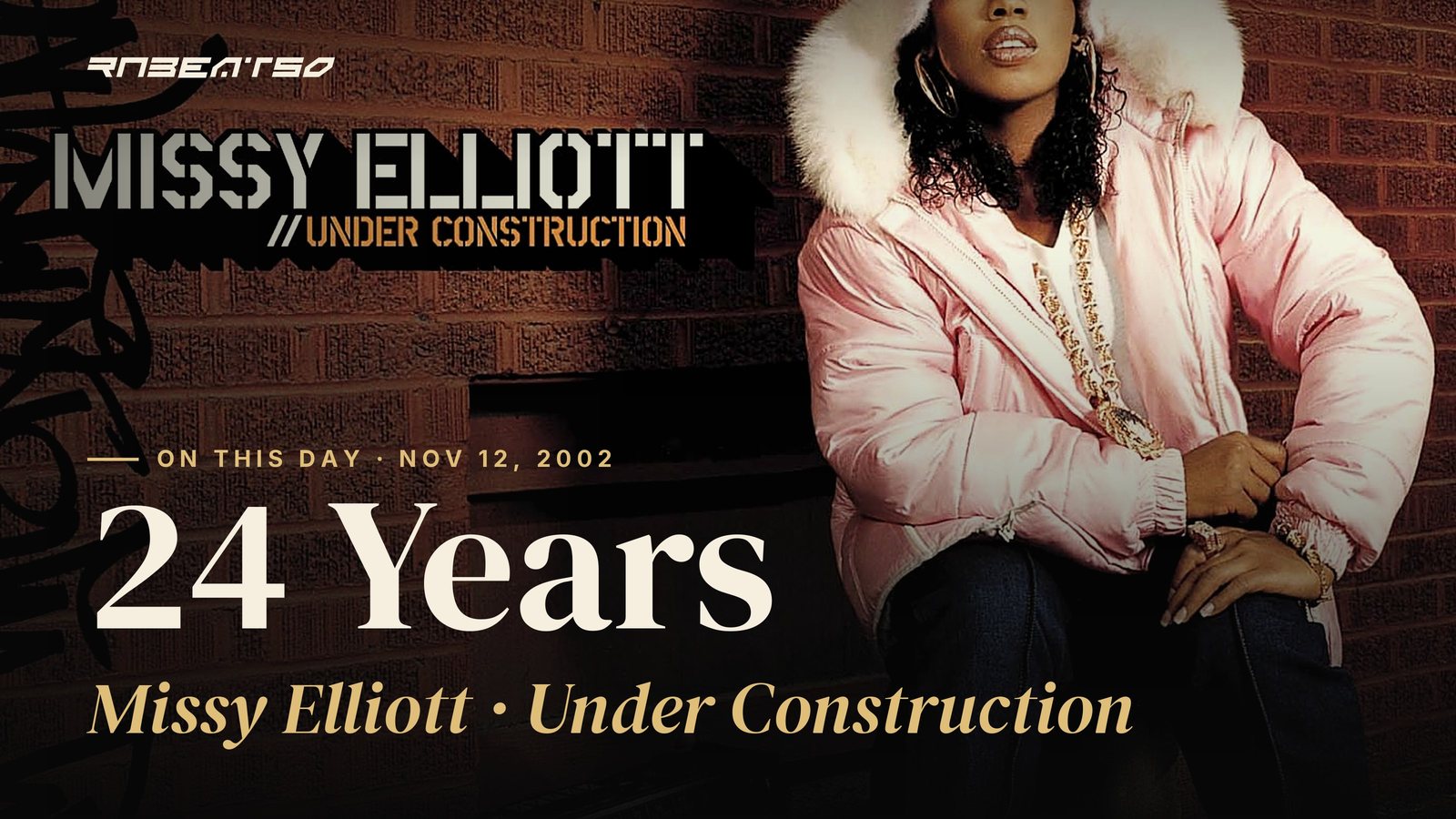
On 12 November 2002, Missy Elliott released an album that brought the past and future of hip-hop together.
Arriving on 12 November 2002 through The Goldmind Inc. and Elektra Records, Under Construction became one of the defining projects of her career.
It gave us “Work It,” “Gossip Folks” featuring Ludacris, and collaborations with Jay-Z, Beyoncé, Method Man and TLC.
But behind the playful lyrics, futuristic production and unforgettable music videos was a much more personal story.
Missy was dealing with the deaths of two close friends, Aaliyah and Lisa “Left Eye” Lopes.
And while the world was dancing to her records, she was using music to make sense of loss.
An Album Inspired by Hip-Hop’s Past
By 2002, Missy Elliott and Timbaland had already established themselves as one of music’s most inventive creative partnerships.
Their productions rarely sounded like anything else on the radio.
For Under Construction, however, Missy wanted to look backwards as well as forwards.
In an interview with Entertainment Tonight during the album’s original promotional campaign, she explained that the project was intended to introduce younger listeners to the foundations of hip-hop.
She believed some fans were growing up without knowing the artists and sounds that had shaped the genre before their own generation.
That idea became central to Under Construction.
The album drew inspiration from old-school rap, incorporating elements associated with artists such as Run-D.M.C., Rock Master Scott & The Dynamic Three and Frankie Smith.
But rather than simply recreating the 1980s, Missy and Timbaland transformed those influences into something that sounded unmistakably new.
She Stopped Listening to Radio to Find Her Own Sound
Here’s something else fans might not know.
Missy revealed that when creating her albums, she deliberately avoided listening to the radio and watching music videos.
Her reason was simple.
She didn’t want to become influenced by what everybody else was doing.
Instead of following whatever sound was dominating the charts, she wanted to develop her own ideas.
That creative independence helps explain why records such as “Work It” and “Gossip Folks” still sound distinctive more than two decades later.
Missy wasn’t trying to recreate another artist’s success.
She was building her own world.
“Work It” Almost Sounded Completely Different
Now for the biggest studio revelation.
In a 2018 interview with the Associated Press, Missy explained how the famous reversed vocals on “Work It” came about.
According to her, an engineer accidentally played part of the recording backwards.
But instead of correcting the mistake, she immediately recognised its musical possibilities.
The reversed vocals landed perfectly against the beat.
Missy decided to keep them and write around the unexpected effect.
It became one of the song’s most recognisable moments.
And that’s not the only surprise.
Timbaland later revealed that “Work It” went through several different versions before they arrived at the final recording.
He recalled rejecting earlier approaches and encouraging Missy to try different lyrics and flows.
Once he heard the version with the backwards hook, he knew they’d found what the song needed.
What started as a mistake became a defining part of one of the biggest hip-hop singles of the decade.
Ten Weeks at No. 2
“Work It” became a massive commercial success.
The song spent ten consecutive weeks at No. 2 on the Billboard Hot 100, beginning in November 2002.
But it never reached the summit.
Why?
Because Eminem’s “Lose Yourself” held the top position throughout that period.
Despite missing out on the Hot 100’s No. 1 spot, “Work It” topped Billboard’s Hot R&B/Hip-Hop Songs chart and reached No. 6 on the UK Singles Chart.
Its music video, directed by Dave Meyers, became just as memorable.
The visual brought Missy’s eccentric creative universe to life, featuring elaborate choreography, surreal imagery and tributes to Aaliyah and Left Eye.
It was everything fans had come to expect from a Missy Elliott video, and then some.
The Emotional Story Behind the Final Track
While Under Construction contained some of Missy’s most playful records, its closing track revealed another side of the album.
“Can You Hear Me?” featured TLC’s surviving members, T-Boz and Chilli.
The song paid tribute to Aaliyah and Lisa “Left Eye” Lopes, both of whom had died before the album’s release.
Aaliyah, Missy’s close friend and frequent collaborator, died in a plane crash in August 2001.
Left Eye died in a road accident in April 2002.
Their deaths had a profound effect on Missy.
In her original 2002 interview with Entertainment Tonight, she explained that “Can You Hear Me?” was her favourite song on the album.
She intentionally placed it at the end so listeners could enjoy the upbeat records first before being reminded of how short life can be.
Suddenly, the title Under Construction carried a much deeper meaning.
This wasn’t simply an artist experimenting with her sound.
It was someone trying to rebuild emotionally while continuing to create music.
The Album That Earned an Album of the Year Nomination
Under Construction debuted at No. 3 on the Billboard 200, selling approximately 259,000 copies in its first week.
It became another major commercial success for Missy and was eventually certified double platinum in the United States.
At the 2004 Grammy Awards, the project earned nominations for both Album of the Year and Best Rap Album.
“Work It” and “Gossip Folks” also received Grammy nominations, reflecting the album’s impact beyond its commercial performance.
Twenty-four years later, Under Construction remains one of Missy Elliott’s most important records.
It looked back at hip-hop’s foundations while introducing production ideas that still sound adventurous today.
It delivered songs that filled dance floors and a closing tribute that brought listeners back to the realities of life.
And it gave us a hit whose most famous moment happened completely by accident.
Sometimes the records that change music aren’t created by following a formula. They’re created by refusing to follow one.
- Apple Music: Under Construction (released 12 November 2002, official album artwork, The Goldmind Inc./Elektra)
- Entertainment Tonight: Missy Elliott 2002 interview — old-school concept, avoiding radio, and Can You Hear Me as her favourite track (flashback published 3 February 2015)
- Associated Press / NME: Missy Elliott on the accidental backwards Work It hook (2018)
- Billboard: Jay-Z Scores 5th Chart-Topper — Under Construction debuts at No. 3 with 259,000 copies (20 November 2002)
- Billboard / Official Charts: Work It — 10 weeks at Hot 100 No. 2 behind Lose Yourself; Hot R&B/Hip-Hop Songs No. 1; UK Singles Chart No. 6
- Recording Academy: Missy Elliott — 2004 Grammy nominations including Album of the Year, Best Rap Album, Work It and Gossip Folks
- Missy Elliott: Work It official video (Dave Meyers)