Sean Paul’s Dutty Rock Turns 24: The Album That Took Jamaican Dancehall Global
From an $800 recording session to “Get Busy,” “Like Glue” and a Grammy win, the story behind one of the defining albums of the 2000s.
There was a time when you couldn’t walk into a club without hearing Sean Paul.
“Gimme the Light.” “Get Busy.” “Like Glue.” “I’m Still in Love with You.”
Four records that helped define the sound of the early 2000s, all from an album that introduced Jamaican dancehall to a much wider international audience.
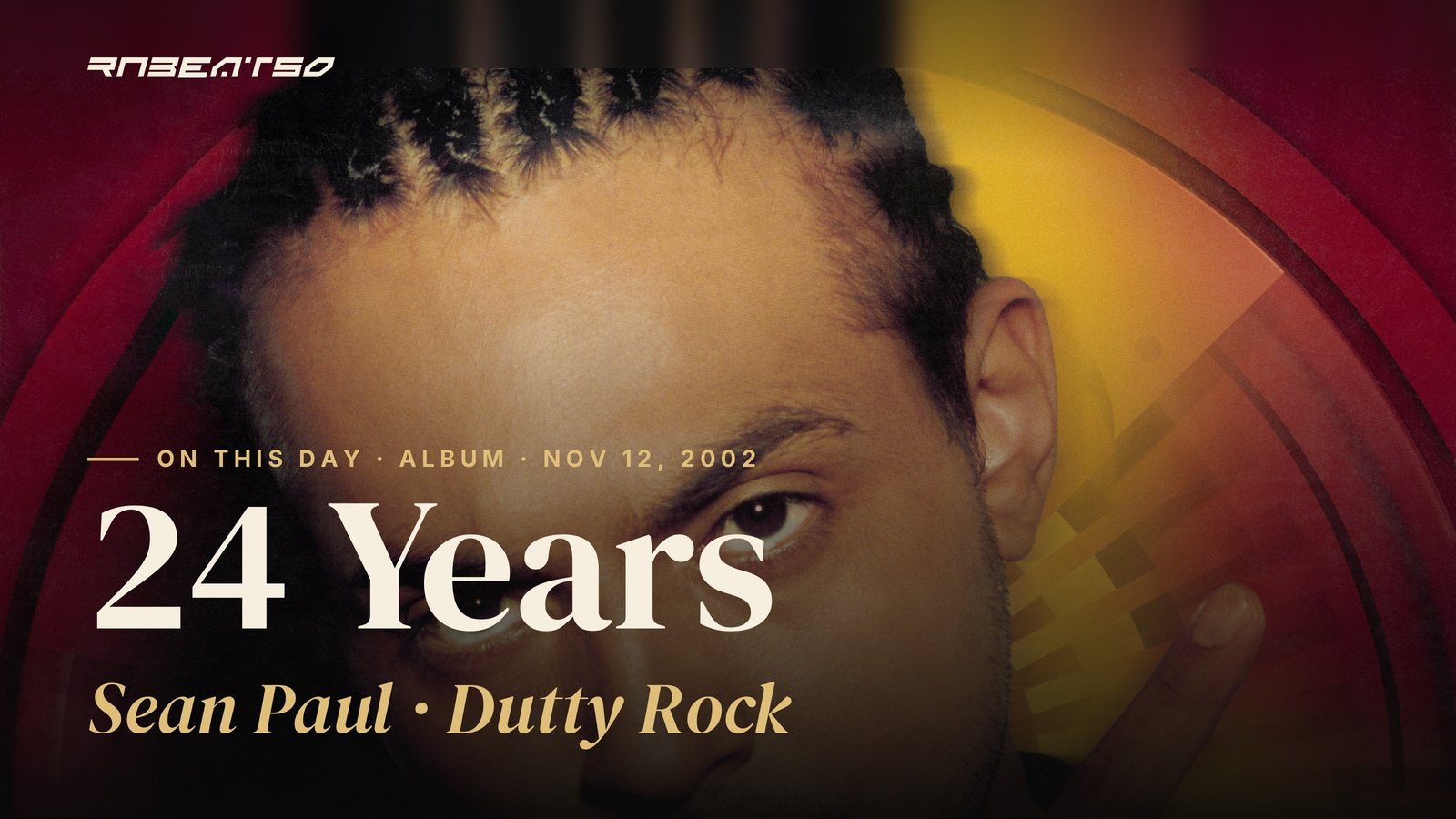
On 12 November 2002, Sean Paul released his second studio album, Dutty Rock, through VP Records and Atlantic Records.
And behind those unmistakable hits are a few stories even longtime fans might not know.
The $800 Session Behind “Gimme the Light”
Before Dutty Rock became a global success, Sean Paul was still working to establish himself internationally.
In a 2022 interview with the Miami New Times, he recalled being offered $800 to record what would become “Gimme the Light.”
He initially turned down the offer because his usual fee was $1,000.
Then something happened to his car, and he needed the money.
Sean Paul called the producer back and accepted the session.
With the instrumental already familiar to him, he developed the lyrics around experiences from a recent trip to New York. Much of the recording, he recalled, was improvised.
That session helped produce his first major international crossover hit.
The Riddim That Changed Everything
If “Gimme the Light” opened the door, “Get Busy” kicked it wide open.
Produced by Steven “Lenky” Marsden, the record was built around the Diwali riddim, one of dancehall’s most recognisable instrumentals.
But the beat wasn’t an immediate favourite.
Marsden later recalled struggling to interest artists in the unusual, percussion-heavy production.
Everything changed once the riddim started circulating.
Sean Paul’s “Get Busy” went on to reach No. 1 on the Billboard Hot 100 in 2003.
The same instrumental also helped power Wayne Wonder’s “No Letting Go,” another major crossover hit.
What began as a Jamaican dancehall production became one of the most recognisable sounds on international radio.
“Like Glue” Wasn’t Supposed to Be a Full Song
Here’s another story.
Sean Paul revealed that the melody behind “Like Glue” originally came to him in a Boston hotel room.
He had been trying to create a new introduction to perform before “Gimme the Light.”
Instead, the idea took on a life of its own.
When he returned to Jamaica, producer Tony “CD” Kelly played him an instrumental that matched the melody he had been developing.
That combination became “Like Glue,” which reached No. 13 on the Billboard Hot 100.
One of the album’s signature songs had begun as little more than a stage introduction.
The Album That Connected Two Worlds
Dutty Rock captured the energy of Jamaican dancehall while connecting with R&B, hip-hop and mainstream pop audiences.
Its production credits brought together established Jamaican hitmakers, including Steely & Clevie, Sly & Robbie and Jeremy Harding, alongside producers such as The Neptunes.
The album also featured “I’m Still in Love with You,” Sean Paul’s collaboration with Sasha, which reworked a classic associated with reggae singer Alton Ellis.
Its international success came at a moment when Caribbean music was becoming increasingly prominent on radio and television around the world.
Sean Paul didn’t abandon dancehall to reach those audiences. He helped bring the sound to them.
A Grammy and a New Era
Dutty Rock peaked at No. 9 on the Billboard 200 and earned multi-platinum sales in the United States.
In 2004, it won the Grammy Award for Best Reggae Album.
The momentum carried into Sean Paul’s collaborations with artists such as Beyoncé and Blu Cantrell, further establishing him as one of the most recognisable voices of the decade.
Twenty-four years later, the album’s biggest songs still sound like they belong in the middle of a packed dance floor.
And somewhere in that success story is a recording session Sean Paul almost turned down over $200.
- Apple Music: Dutty Rock (20th Anniversary) (released 12 November 2002, official album artwork, VP Records)
- Billboard: 'Light' Propels Sean Paul Debut (12 November 2002 VP/Atlantic release; Billboard 200 debut)
- Billboard: Sean Paul's Global Call (Dutty Rock Billboard 200 peak No. 9; Get Busy Hot 100 No. 1)
- Miami New Times: Sean Paul celebrates 20 years of Dutty Rock ($800 Gimme the Light session, 20 December 2022)
- Billboard: The Diwali Riddim, Lenky, Get Busy and No Letting Go
- Grammy: Best Reggae Album, 46th Annual Grammy Awards (2004) — Dutty Rock
- Atlantic Records: Sean Paul, Get Busy / Like Glue official video