Aaliyah’s “One in a Million” Turns 30: The Song Radio Didn’t Know What to Do With
The Timbaland and Missy Elliott collaboration sounded so different in 1996 that some radio programmers didn’t know what to do with it. Thirty years later, the production remains unmistakable.
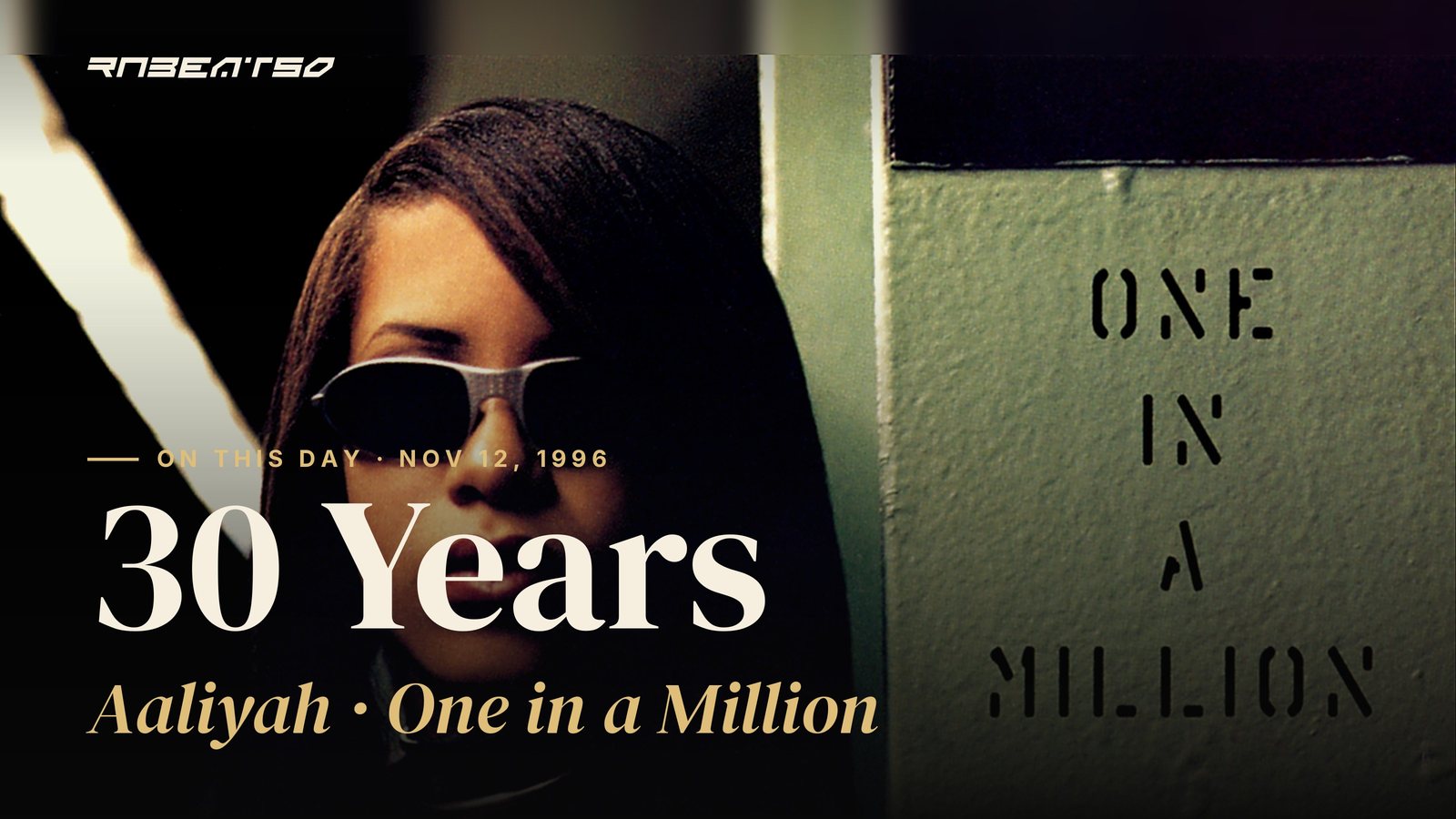
Thirty years ago, Aaliyah was introducing R&B listeners to a sound that didn’t quite fit the rules.
“One in a Million,” produced by Timbaland and written by Timbaland and Missy Elliott, was included on Aaliyah’s second studio album in August 1996. Its US rhythmic-radio release is dated 12 November that year.
But what eventually became one of her signature records wasn’t an easy sell to radio.
Some programmers thought the production was too unusual. Others reportedly objected to the sound of crickets in the instrumental.
And according to the people behind the record, there was even an attempt to make it more conventional.
The remarkable part? Aaliyah believed in the song from the beginning.
Two Newcomers From Virginia
In 1996, Aaliyah was just 17 years old.
Her debut album had already introduced her to R&B audiences, but her second project marked a new stage in her artistic development.
For One in a Million, she began working with a wider group of producers and songwriters, including two emerging talents from Virginia: Timothy “Timbaland” Mosley and Melissa “Missy Elliott” Elliott.
Neither had yet become the industry powerhouse they would eventually be.
In a 2011 interview with The FADER, Missy recalled how nervous she and Timbaland were when they first travelled to Detroit to work with Aaliyah.
Their production style was different from the R&B dominating radio.
But Aaliyah wasn’t looking for something ordinary.
Missy remembered that when they created “One in a Million,” Aaliyah immediately recognised its potential.
She didn’t need convincing.
That confidence would prove important when the song reached radio.
The Crickets That Confused Radio
The beat was unlike almost anything else being played on mainstream R&B stations.
Timbaland built the track around an unusual rhythmic pattern, low-end production and distinctive sound effects, including cricket-like chirps.
Against that instrumental, Aaliyah delivered a smooth, understated vocal performance.
The contrast became the song’s signature.
But not everyone understood it immediately.
Jomo Hankerson, Aaliyah’s cousin and a Blackground Records executive, later recalled that some radio programmers struggled to categorise the record.
He said one programmer in Chicago refused to play it because of the cricket sounds.
To industry executives accustomed to more conventional R&B arrangements, the song represented a risk.
To Aaliyah and her collaborators, those differences were precisely what made it special.
The Master Tapes That Left the Studio
Here’s the part many fans may not know.
According to Jomo Hankerson, Atlantic Records considered creating a more radio-friendly version of “One in a Million,” reducing the unusual rhythmic elements that defined Timbaland’s production.
But the Blackground team didn’t want the original recording changed.
Hankerson recalled that they removed the two-inch master tapes from the studio to prevent unauthorised remixes.
In the days before today’s digital recording workflows, physically controlling the tapes meant controlling access to the recording.
It was a bold decision, particularly when the song had yet to prove itself commercially.
But the team believed in the record exactly as it was.
And eventually, radio audiences began proving them right.
The DJ Who Played It Ten Times
Missy Elliott later recalled hearing “One in a Million” played at a nightclub surrounded by records from major hip-hop stars.
What happened next stayed with her.
The DJ kept bringing the song back, repeatedly replaying it for the crowd.
According to Missy, he played it back ten times.
It was the moment she realised their unconventional sound could connect with audiences far beyond a traditional slow-jam setting.
The track worked as both a sensual R&B record and something a DJ could play in the middle of a hip-hop set.
What initially confused radio programmers became one of the song’s greatest strengths.
A Video Ahead of Its Time
Director Paul Hunter gave “One in a Million” a futuristic visual treatment that complemented Timbaland’s production.
The video brought Aaliyah together with collaborators including Missy Elliott, Timbaland and Ginuwine.
Its distinctive styling and sleek imagery helped establish the visual identity that would become closely associated with Aaliyah’s late-1990s career.
By this point, her music and image were moving in the same direction: understated, confident and ahead of their time.
The Numbers and the Legacy
“One in a Million” eventually reached No. 1 on Billboard’s R&B/Hip-Hop Airplay chart in early 1997.
It also reached No. 2 on the Rhythmic Airplay chart.
The song did not appear on the Billboard Hot 100 because its US release was radio-only at a time when the chart required a commercially available single.
Its impact extended well beyond those figures.
The collaboration helped establish the creative partnership between Aaliyah, Timbaland and Missy Elliott, three artists whose work would reshape the sound of contemporary R&B.
And the very elements that made the record difficult to programme in 1996 are the ones that make it instantly recognisable today.
The unusual beat. The cricket sounds. Aaliyah’s effortless vocals.
Thirty years after its US rhythmic-radio date, “One in a Million” remains a reminder that some of R&B’s most influential records were the ones that refused to sound like everything else.
- Apple Music: One In A Million (official album artwork, Blackground/Atlantic, 1996)
- Billboard: Aaliyah's One In a Million turns 20 (US album release August 1996)
- The FADER: Aaliyah: Angel So Fly (25 August 2011) — Missy Elliott on Detroit, the song's potential, and the DJ who played it ten times; Jomo Hankerson on Chicago radio, crickets, and the two-inch master tapes
- Billboard: R&B/Hip-Hop Airplay — One in a Million peak No. 1, peak date 4 January 1997
- Billboard: Rhythmic Airplay — One in a Million peak No. 2, peak date 1 March 1997
- Billboard: airplay-only singles were ineligible for the Hot 100 until the chart-rule change of 5 December 1998
- Blackground Records 2.0: Aaliyah, One in a Million official video (directed by Paul Hunter)